The blind corner problem
Two base units meet at right angles, and one door opens onto only part of the cavity. Many base units are roughly 600 mm deep, so everything beyond arm's reach is effectively lost. The dead zone is not small. It is often the biggest cupboard in the room, and it is used the least.
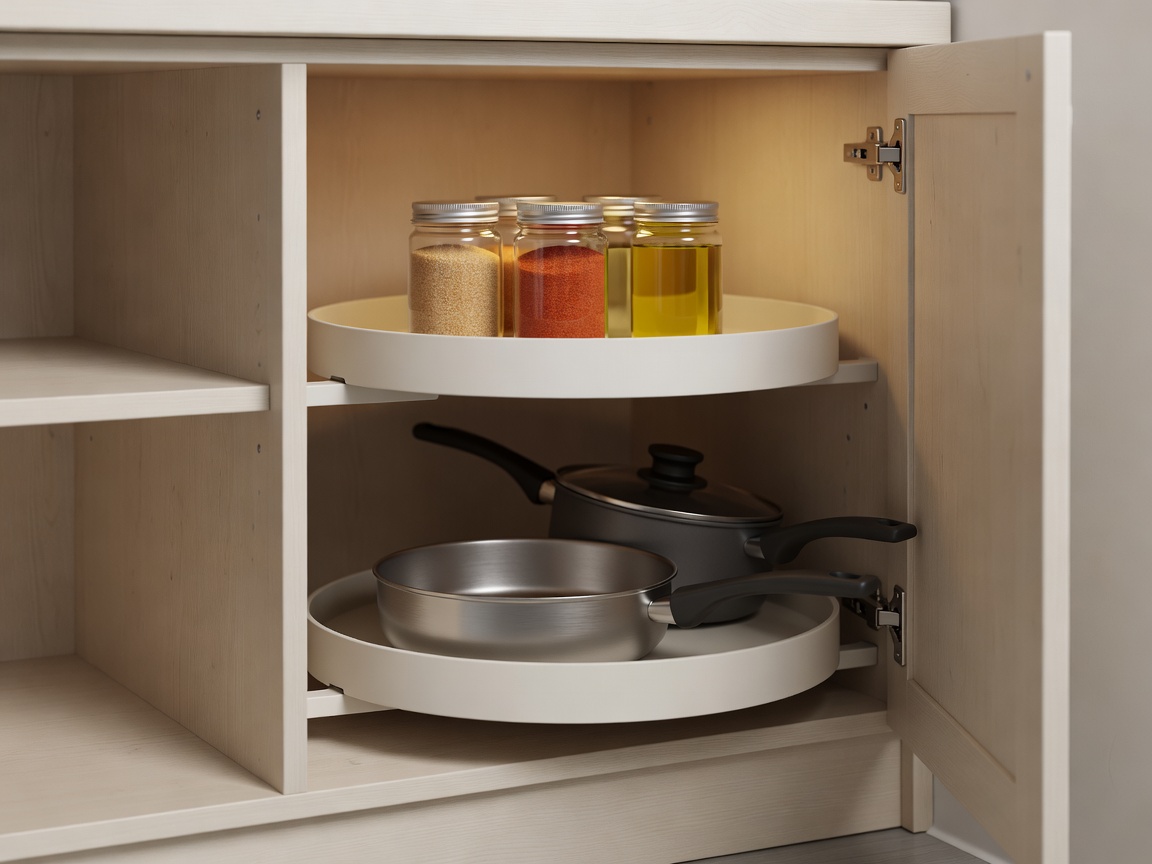
Rotating trays (lazy Susans)
The cheapest and most renter-friendly fix. A full circle wastes the corners of the cabinet, and a kidney or D-shaped tray follows the cavity better. Round trays are commonly sold in diameters from about 25 to 40 cm. Use shallow lips so jars cannot slide off, and a non-slip base so the tray itself does not wander. Put the heaviest items on the lowest tier.
Pull-out and swing-out systems
If you are replacing doors or the whole kitchen, fitted hardware turns the corner into a stack of baskets that glide out. Systems such as Blum LeMans and similar units from Hettich and Häfele swing or slide the baskets through the door opening so that the back reaches you. They cost more and need the right cabinet width, but they are the closest thing to getting the cupboard back.
Cheap wins for existing cupboards
- Hooks inside the door for lids and cloths
- Tiered risers so back rows stay visible
- Stackable bins labelled by zone
- A tall caddy for oils and bottles in the narrowest section
Measure before you buy
Measure the door opening width, because that is the smallest gap your tray or basket must pass. Then the internal depth along each wall, the shelf-to-shelf height, and the position of any hinge or leg that intrudes. Subtract a centimetre or two for clearance. Write all four numbers down. If the door opening is narrower than the tray, it will never go in, however good the photo looks.
Product rationale
Why we start with a tray, not hardware
A tray costs little, needs no tools, and moves to the next flat. It proves whether the corner is worth upgrading.
Why zones beat random stacking
If oils, jars and pans each have a spot, you find things by habit. Habit is the best storage system there is.
Why kidney trays often beat round ones
They fill more of the triangular cavity, so you keep more usable shelf area for the same cupboard.