Start with the escape route
Before adding anything, remember what a hall is for. In a flat or shared house, the route to the front door must stay clear and unobstructed. In England, Approved Document B covers fire safety, and many landlords and fire officers expect shared hallways to be free from stored items. If your hall is communal, ask before leaving anything there. If it is private, still keep the walking width open, and favour wall-hung over floor-standing.
Hallway dead ends
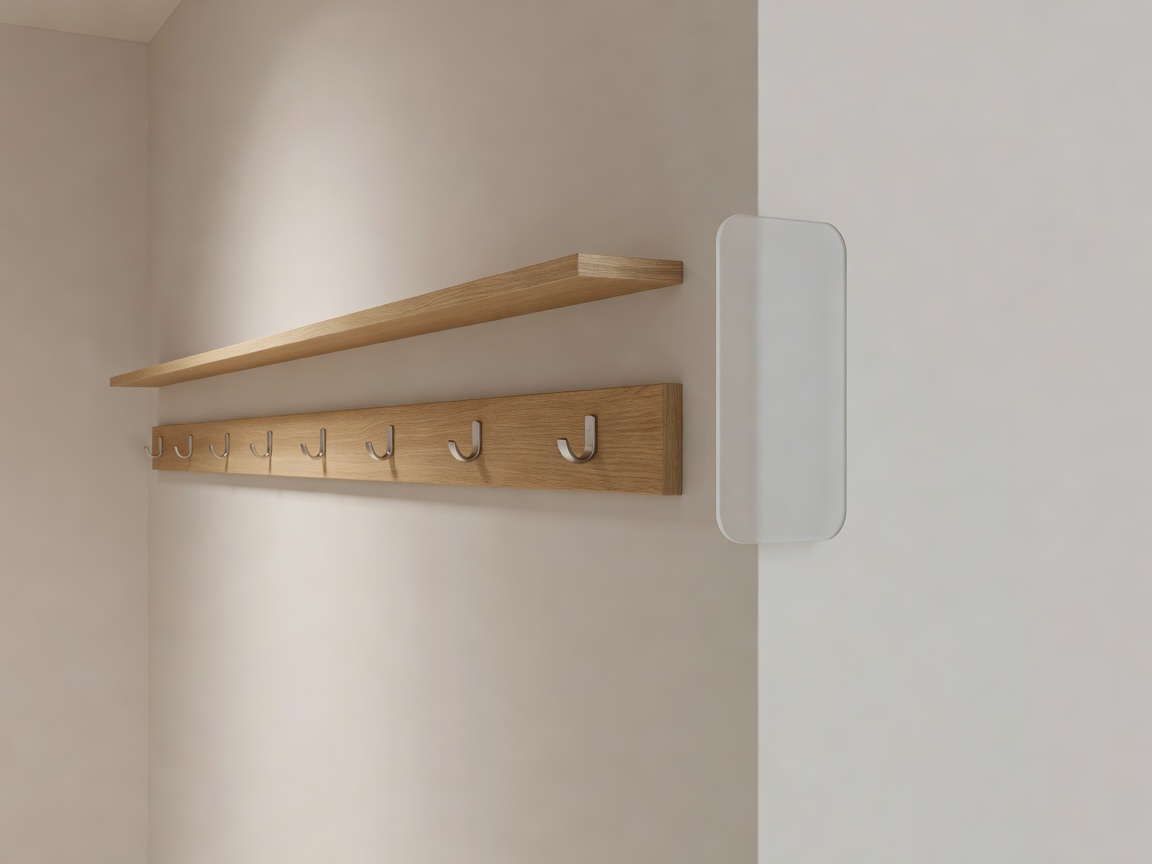
The end of a hall is a short wall facing you. Narrow console tables, a slim shoe cabinet or a hook rail with a shelf above all suit it. A rule of thumb that works: stop at around 25 to 30 cm depth so two people can still pass. A mirror above the console makes the hall feel longer, which is a small bonus.
Outside corners: the knocked edge
Chimney breasts, door reveals and boxed-in pipes create outside corners that attract bags, elbows and vacuum cleaners. Fit a clear or painted edge guard to protect plaster. Then hang a hook strip on the flat wall beside it, so coats and bags take the zone people brush against anyway. Adhesive strips work on clean, painted, flat surfaces. Check the weight rating and follow the removal steps, usually pulling the tab slowly parallel to the wall, so you do not lift paint.
Under-stair space
A sloping ceiling and a long floor means depth is plentiful and access is poor. Wheeled pull-out drawers solve this: the back comes to you. Put shoes at the low front where the ceiling is lowest, and tall items such as the vacuum or ironing board at the tall end. Do not cut into or alter the staircase structure without proper advice. Approved Document K covers stairs, and the stringers and supports may be load-bearing. A freestanding or wheeled unit avoids all of that.
The stair turn
Where the stairs turn, a wedge-shaped gap often appears under the landing or beside the newel. Slim triangular shelves, or a tall vertical organiser with a pull-out front, can fit here. Measure the angle with a template, not your eye.
Product rationale
Why wheeled drawers beat fixed shelves under the stairs
You can move a drawer fully into the open to see the contents, and nothing is permanently attached to the staircase.
Why we like hook rails in halls
They use wall surface only, keep the floor clear and take seconds to use when you are leaving.
Why edge guards are worth it
A guard costs far less than replastering and repainting a chipped outside corner every year.