Why damp corners go wrong
Corners trap moisture. Two surfaces meet, air barely moves, and condensation settles on the cooler wall. Add a caddy sitting wet against the tile and you get rust rings, grime and mould along the sealant line. The fix is partly storage and partly airflow. Open the window or run the extractor after use, and choose storage that lets water drain away instead of pooling.
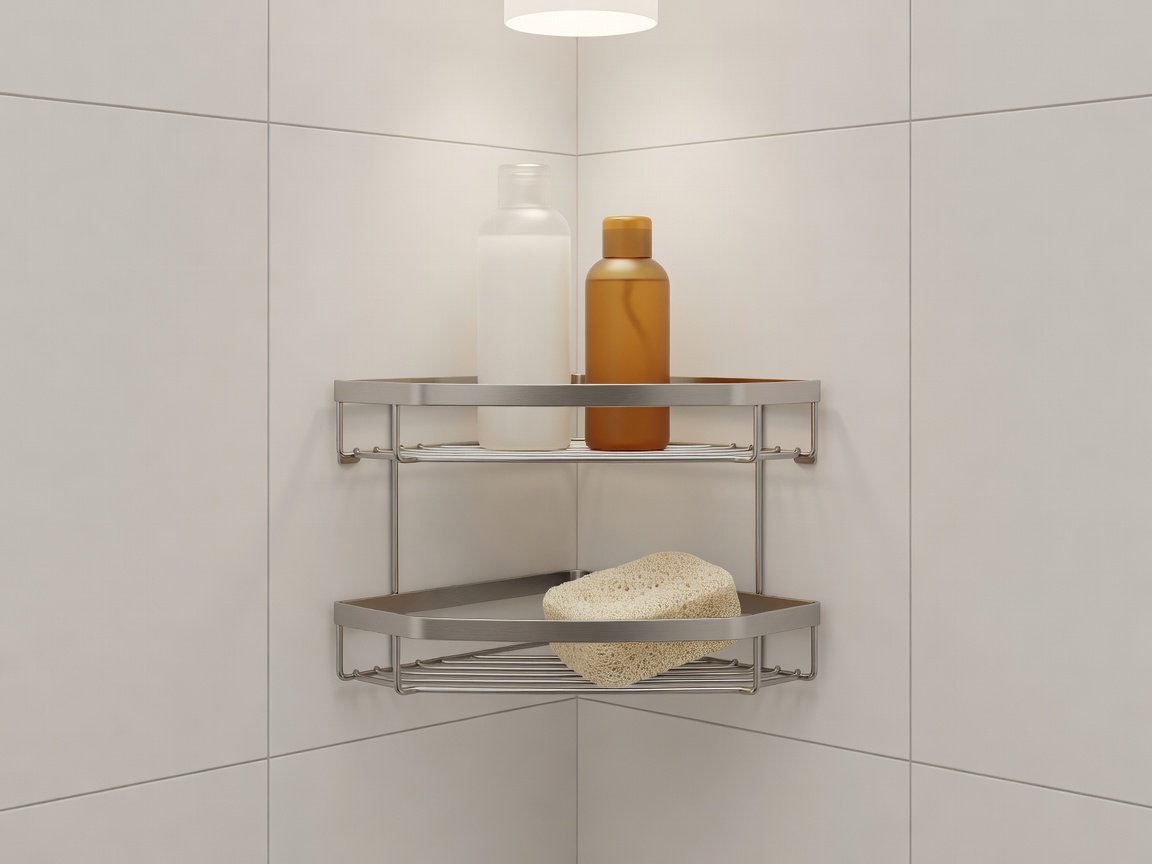
Materials that survive
Stainless steel in grade 304 handles most homes, and 316 resists corrosion better in hard-water or coastal areas. Anodised aluminium is lighter and rust-free. ABS and polypropylene plastics are cheap and rust-proof, but can fade. Bamboo looks good yet must be sealed and dried, or it blackens. Avoid chrome-plated mild steel in the shower itself, where the plating tends to flake.
Three ways to mount
Tension pole
A pole wedges between floor and ceiling, with baskets that clip on. No holes in tiles, ideal for renters. It needs a solid ceiling and a flat floor, and you should recheck the tension every few months.
Adhesive
Fine for light bottles on smooth, clean, non-porous tile. Degrease first, press firmly, and wait the stated cure time before loading. Heat and steam weaken some adhesives, so choose products rated for bathrooms.
Drilled
The most secure, and the one to use for heavier loads. Drill into grout lines where possible, use a tile drill bit and masking tape to stop skidding, and seal the hole with sanitary silicone so that water does not creep behind the tile.
Mould, sealant and ventilation
Where wall meets wall, the sealant bead is the first thing to fail. Replace cracked or blackened silicone with a sanitary-grade product. Approved Document F covers ventilation in England, and the practical advice is simple: use the extractor fan, and leave it running for a while after a shower. Dry corners resist mould far better than any caddy can help.
Electrical zones: a hard line
Bathrooms are split into zones around the bath and shower, and electrical equipment must have a suitable IP rating for each zone under wiring rules such as BS 7671. Do not add lights, shaver points or heated accessories yourself. Hire a qualified electrician. Corner storage should stay non-electrical.
Product rationale
Why we prefer open-slat baskets
Water drains straight through, so bottles dry faster and sit in less standing water.
Why a tension pole beats suction in a shower
Suction cups lose grip with soap and steam over time. A tension pole depends on spring force and geometry, which do not weaken in humidity.
Why we keep heavy bottles low
Weight at the bottom lowers the tipping risk on a pole and puts less strain on adhesive or fixings.